March 30, 2024
It’s undeniable that art design plays a huge role in every game. From icons to whole terrains, every amazing game has its unique and memorable style. But, art design plays a more significant role than just presenting the style of the game. It helps the player delve deeper into the story. This is what makes your gaming experience more immersive.
There are a few things that make a game memorable. It can be an amazing soundtrack, a riveting story, or likable characters. However, one of the first things a player will notice about a game is its art design. Much like sound design, art design in games has a few important roles. The first role is establishing the game’s setting and atmosphere. The other role, more important than just the art style, is evoking certain emotions in players. This can be done with the world design, using specific colors or lighting. In addition to that, art design can even serve a more practical purpose. It can guide players through the game or signal them that danger is ahead.
Good game artists know how to evoke certain emotions in players using purely their art. So, if you’re curious about game artists’ influence over players, keep reading!
Environmental storytelling
Art design plays a crucial role in establishing the tone of the game. For instance, it’s hard to imagine a cute, colorful design in a Soulsborne game. Likewise, you would expect somber and eerie graphics in a game like Stardew Valley. Art designers can sometimes play with this concept. In games like Five Nights at Freddy’s: Security Breach, players unfamiliar with the franchise might be tricked into thinking it’s a happy, innocent game. This is also the art designer’s choice to provoke certain emotions in players. With all this in mind, we can see just how vital art design is in setting the game’s tone.
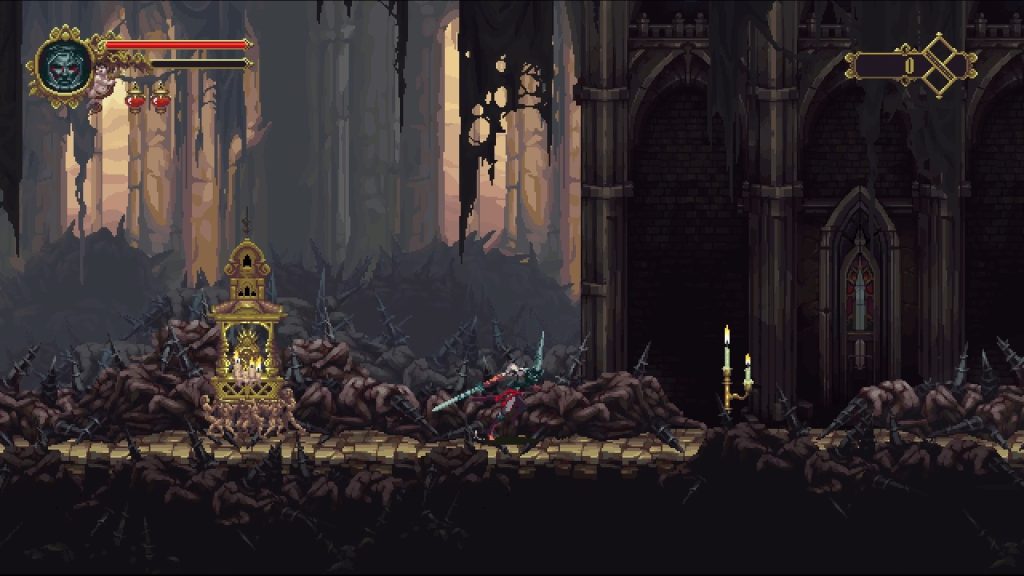
When we think of games like those from the Dark Souls series, we instantly have a certain image in our mind. Art designers often employ realistic graphics mixed with fantastical elements. In addition to that, the color schemes are always darker and less saturated. All of this creates a detailed and unsettling environment and visually provokes certain feelings like mystery or dread. On the other hand, in games like The Legend of Zelda, this visual aspect can make players feel serene and adventurous. Art designers know how to use color palettes, light and shadows, and world design to achieve the desired effects. Using this, they tell us a story of its own.
That’s just one of the ways visual design achieves environmental storytelling. Art designers often place visual details and cues that further develop the depth of a game. This can be extremely important in lore-rich, symbolic games like Blasphemous. Such games rarely rely on direct storytelling. Since the protagonist has made a vow of silence, dialogue is non-existent in this game. That’s why the game relies so heavily on the visual aspect alone. This lets players unravel the game’s lore by noticing certain visual cues. Without considering these cues, players will have a tough time navigating the game and its complex story. This makes the game more subtle yet disturbing and effectively more immersive.
Character design

Character design is another essential aspect of art design. From protagonists to bosses, it’s important to have innovative and memorable characters. However, there are certain principles art designers follow when designing new characters. When you think of cute or wholesome characters, they’ll usually be designed to look non-threatening.
On the other hand, enemies and bosses will always be designed to convey the feeling of formidability. This is used to emphasize certain characteristics of these characters. Designing them that way leaves an impression on the player and instantly tells us what we should think of these characters. Certain games can even use this technique to trick us into thinking a character is harmless (think Flowey from Undertale). In boss battles, the visual aspect is also significant for producing certain emotions. If we perceive a boss as a big threat, we are more likely to struggle to fight it. In addition, looking at a boss closely can reveal his weakness. This is a fantastic way to make a game more immersive and emotionally engaging.
In conclusion, art design is a vital part of any game. It’s primarily used to establish the tone for the whole game. It offers players important visual cues that help them understand the story in depth. In addition, it can tell us what we need to know about certain characters and bosses. Using all of this, good art design can provoke specific emotions in players. This is precisely what makes a game truly memorable and immersive.