November 21, 2025
While roughly half of all gamers are women, only a small number are part of the professional esports scene. This underrepresentation of women in the esports scene might make some reluctant to try to break through. Thankfully, we had the opportunity to speak with Heather ‘sapphiRe’ Garozzo (Former professional Counter-Strike champion, founder & president of Raidiant), Jen Franklin (COO of Raidiant), Alexis (Sr. Broadcast Producer), and Ali (Sr. Manager Event Operations), who offered us insight into what keeps them in esports. Here’s what they had to say.
R: What inspired you to start working in esports?
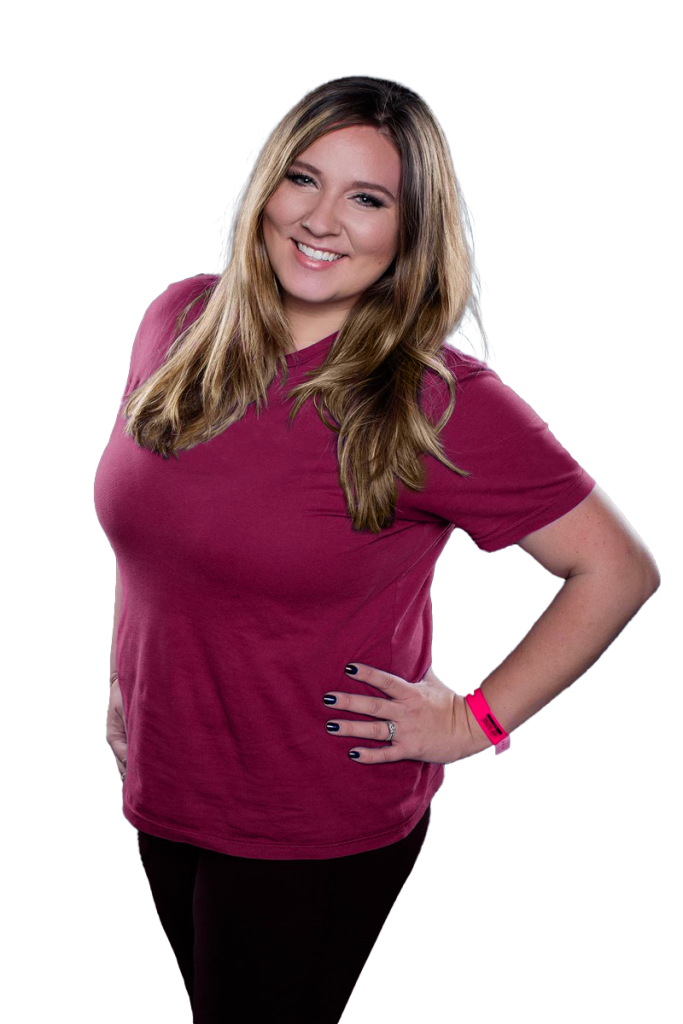
Heather, Founder and President of Raidiant
- Heather (Founder and president of Raidiant): At the beginning, I wasn’t inspired. It didn’t feel like a real career path for many years. I was just involved out of passion and wanted to help the industry I love thrive. It wasn’t until 2017 that I had the opportunity to work in esports full-time, after 15 years in the industry.
In addition to feeling like the industry had more stability, I finally had the opportunity to work in a full-time position that offered benefits akin to a “regular job”, which gave me some peace of mind. Moreover, though, I found a position – marketing for an esports team and then eventually founding Raidiant – that I was genuinely excited about. I felt like I was making a real difference for the community.
- Alexis (Sr. Broadcast Producer): Watching the early days of the LCS, I was really moved by the energy and passion everyone had – in the team houses, on the broadcasts. I didn’t know what I wanted to do with my life, but I loved League of Legends. I saw so many people working tirelessly to celebrate and build their lives around esports, and I just knew I wanted a part of that for myself.
- Ali (Sr. Manager Event Operations): I have been fueled by spite since my early childhood. Having an older brother can do that to you, being reminded regularly that he gets to do things because he was older, bigger, and stronger than I was. The only even ground we had was video games, specifically Tony Hawk Pro Skater. Growing up competing against him got me into games like Halo 2 and Call of Duty: World at War. I was bullied in high school for gaming, and stepped away to try to hide and blend in. Later in life, I found myself missing games and learning more about PC games like CS:GO. The only way I could engage in CS myself was through watching others stream it. This is how I came across more women openly engaging in gaming, something that I was bullied out of doing. So the spite returned, and I wanted to stream and learn more about what competitive gaming has to offer.
While streaming, I learned more about esports and began competing in PUBG for a very short period of time. At that time, I didn’t know what I wanted to do with this hobby, but I knew there was something special here. By my senior year of college, I was looking for the next step, as I felt that streaming wasn’t the endgame for me. Then I stumbled into a LAN center looking for a venue to host a streamer meet-up. I walked out with a media internship at a small esports operations company and an opportunity I never knew was out there for me. Spite continues to be my main drive, which, yeah, I know it sounds bad – however, it’s the spite of others telling me, and many others in the world, that we can’t do something because of societal norms that drives me to prove them wrong. I will never shut up about the fact that everyone has a right to exist and compete in esports.
R: Do you have any role models in the industry, and how have they inspired you?
- Jen Franklin (COO Raidiant): My role models are the women who put meaningful energy, creativity, and hard work into changing the gaming industry for the better. Women like Joanie Kraut from Women in Games International, whose org provides countless opportunities for women through internships, networking events, and structured programming designed to improve representation and participation. Joanie is not only a highly successful CEO but also a mom of three, and she always maintains a calming sense of grace, confidence, and perseverance.
- Heather: I have a number of role models. Growing up, I looked up to the best women competitors in the world – Alice “Ali” Lew, Christine “Potter” Chi, and Stephanie “missharvey” Harvey, all of whom eventually became my teammates years later. I admired their drive and their motivation, not just to be the best women esports athletes in the world, but to strive to be the best, regardless of gender.
- Alexis: My biggest inspiration and role model in the esports industry was Heather. Watching her play and observe – as an up-and-coming player and broadcaster – was really inspiring to me. She was both a role model as a player and as someone who made a career in esports.
- Ali: Originally, I didn’t have a role model to guide me to tournament operations, as I was surrounded by men early on. My role models in the beginning were powerful women who streamed, wanting to be just like them. It wasn’t until I started my first esports job that I found some amazing peers who helped guide me to a role that I felt strong and empowered. Andres Mirandes and Christina Zammarrelli are the main reasons I stayed at my first job for as long as I did. The two of them provided me with a lot of guidance and confidence to take on whatever task I set my mind to. Without them, I may not have felt comfortable pursuing a role in tournament and competitive operations.
R: What keeps you passionate about growing your esports career?
- Jen Franklin: I’ve always been passionate about my career, no matter what industry I focus on. It’s a passion driven by that feeling you get when building community, defining traditions and superstitions, and watching storylines develop through competition. There’s something so special about being part of a movement, part of a community working towards a common goal. I’ve always felt so accepted by the gaming community, and giving back is a passion and a privilege.
- Heather: There’s so much progress still to be made. It’s such a young industry, and I feel like I can help drive real change and real growth. I am a firm believer that esports has the potential to be as big as traditional sports. Also, I see a lot of “wrongs” still, places we can do better as an industry and a community. I want people to feel welcomed. That drives me to do my best every day to help esports prosper.
- Alexis: Literally just the feeling of playing a new esports title, falling in love with its mechanics, trying to climb to the top few percentiles, and then thinking, “Wow, this game is awesome, I bet it’d be fun to broadcast it.” That’s repeated across many titles. Right now, I’m playing a lot of Deadlock, and I’m inspired more than anything else to find a way to be a part of the broadcasts for that.
- Ali: Providing others with opportunity. That’s all I want to be able to do. As early in my career as I felt gatekept from knowledge because someone else didn’t find me worthy of experience. Aside from any conflicts of interest that may compromise the tournament’s integrity, nothing should prevent anyone from learning about competitive operations.
R: Do you notice any significant changes in the industry now compared to when you first started, especially in terms of diversity and acceptance?
- Jen Franklin: The drive to improve diversity and inclusion has been slow, but it’s been steady. We started Raidiant almost three years ago and have worked our way to gain the trust of the biggest game publishers and brands, and we create new milestones with every event. It’s inspiring to see some of the women we started with move on to leadership roles in production, get signed to the biggest talent agencies, and appear on the biggest broadcasts.
- Heather: Seeing women in esports is commonplace now. Years ago, I was the only woman in the room. Now, when you attend an esports event or hop into a random VALORANT lobby, the percentage of women is nearly equal to that of the number of men.
The next step is to see women advance in the industry – be amongst the most watched content creators, compete on the biggest stages, and hold more positions of leadership. - Ali: Back in 2018, the first time I walked into a FGC tournament, someone asked which player I was dating. No one has asked me that question in 5 years. There are more and more marginalized gendered folk on LAN – not only competing, but in roles like tournament operations or broadcast production. This is very important to me, and it’s also important for individuals to feel comfortable expressing themselves.
R: Is there anything you would highlight as a moment you were the proudest of in your career?
- Jen Franklin: A few moments stick out – watching the winners of the very first Milk Cup tournament raise the trophy in front of a massive crowd while celebrating with our team in the wings is a highlight. But the proudest moments are when I reflect on the work we do, knowing it will pave the way for my daughter and her friends to have a more level playing field, where she’ll have a voice and the opportunity to thrive.
- Heather: My proudest moment is winning the ESWC 2012 World Championship, over a decade of work that I put in to win a title.
- Ali (Sr. Manager Event Operations) – My original proudest moment was when I helped Riot build Game Changers North America at my first job. When I was laid off from that job, I was heartbroken about losing what I felt like was my baby. It was the first time at that job when I felt properly trusted with a product and allowed to operate it as I envisioned it. However, 24 hours after I was laid off, Riot approached me to be a player handler for VALORANT Champions Istanbul. That turned into 2+ years of working directly with the developer who trusted me to operate Game Changers for them. In November 2023, we got the call that Raidiant will be operating Game Changers NA 2024, and that was my proudest moment – getting my baby back.
R: Which advice would you give to women and people of marginalized genders who want to start working in esports?
- Jen Franklin: Be snoopy, be bold! The esports world is magnificently transparent and welcoming. Research and find the people who inspire you, who have jobs you want to ultimately have, do your homework, and reach out to them. Everyone who works in esports wants to see new talent develop and grow. I’ve found people in leadership positions who genuinely want to help and are incredibly generous with their time.
- Heather: Ask questions, get involved, make yourself known. Find something people haven’t done before (THERE ARE LOTS!) and create it yourself. That really helps you stand out in a competitive industry.
- Alexis: Don’t ever do bad work. Regardless of the opportunity, how big or how small, always do a good job. Go the extra mile and anticipate needs before they become problems. Be kind always. Don’t gossip or put down others in the industry, as they could be working beside you tomorrow. Plus, people will want to hire back the nice contractor who went above and beyond. It’s fine to start with community or grassroots events. We all do.
- Ali: Esports may seem huge, but it is a very small network. Be kind to everyone, and don’t let your ego impact your work or others. People will remember you if you do a good job and you’re kind to others.
Big thanks to these amazing women for sharing their valuable insight with us!