October 5, 2023
Activision Blizzard’s Overwatch 2 has been long anticipated by franchise fans since its first announcement at BlizzCon 2019. Although the full game will not be released until later this year, the Overwatch 2 beta has already shown some key differences between Overwatch 2 and its predecessor. With the first Overwatch League matches played on this version behind us, let us see how the support role has changed compared to the original Overwatch.
The big picture
Before we dive into the details of the various support characters, we will focus on some of the big picture adjustments made by Overwatch developers. The most prominent is the transition from a 6v6 model, consisting of two tanks, two DPS, and two supporters, to 5v5, removing one tank. The implications on gameplay and strategy are tremendous, but what does this change mean for the support role in particular?
The new 5v5 model entails diverse consequences for supports. On the one hand, having only one tank on your team creates more high-pressure situations for supports as they do not receive the same level of peel and protection from their tanks as they used to. This forces supports to peel more for their fellow teammates, play more defensively and be more mindful of their positioning. On the other hand, playing as a team of five can feel less stressful as there are simply fewer players to look after.
A second major adjustment is the decrease of shields and crowd control abilities in Overwatch 2. In the days of the original Overwatch, team compositions would often consist of multiple heroes with shields and CC abilities, resulting in drawn-out team fights of poking and shield spamming and a culminating end in ult combos and CC chains. The hero Brigitte was the perfect representation of this trend. Now, these days are gone with heroes, such as Brigitte and Cassidy, no longer being able to stun their opponents. This, combined with a healing reduction, leads to shorter team fights and the game overall feeling more like an FPS than a MOBA title.
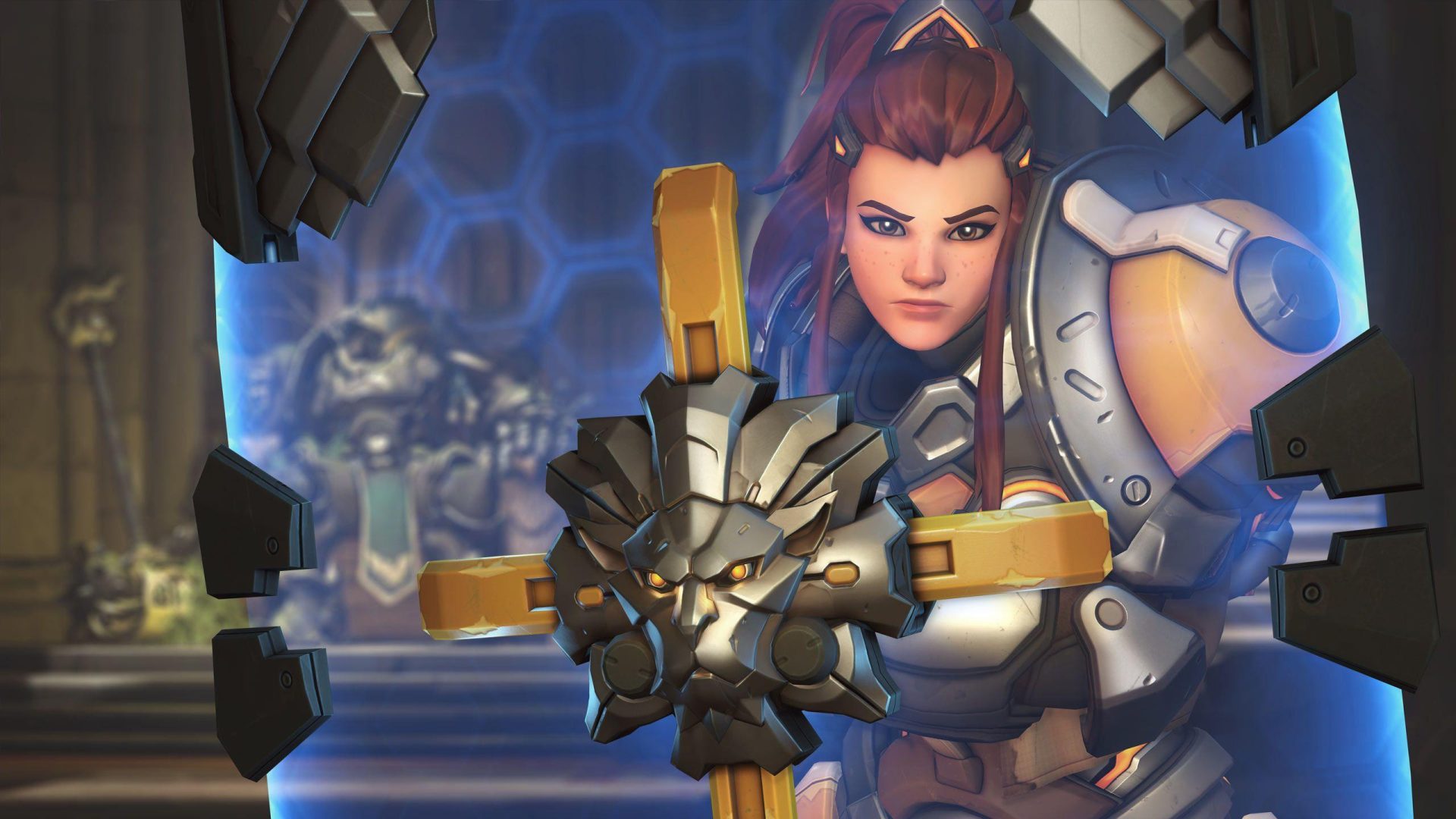
In essence, the life of support heroes has become more dangerous in the Overwatch universe. The newly added passive healing ability inherent to all supports is another indicator of this. Passive healing is not a buff but rather a necessary adjustment to optimize the survivability of supports during team fights. Moreover, as support heroes can no longer rely on the protection of shields, they must make more use of the environmental coverage. The focus on FPS versus MOBA elements also affects the gaming experience for support players. They have a bigger damage impact with shorter team fights and fewer shields. Beyond that, some supports that have previously functioned as healing batteries can now contribute to the outcome of a team fight in more diverse ways.
The heroes
Ana
Let us now examine how specific support heroes perform in Overwatch 2, starting with the strongest of them all: Ana. Ana has never been a weak hero, but in Overwatch 2, she shines exceptionally bright. Due to the previously mentioned changes, Ana does not have to focus on just keeping her tanks alive anymore. Her kit is incredibly strong in the current meta. Her Biotic Grenade negates enemy healing, and her Sleep Dart prevents DPS heroes from causing fatal damage to her and her team. Additionally, Ana now has more opportunities to do damage from afar with her sniper rifle. All these factors make her a near must-pick in high-rank and professional Overwatch.
Lucio
Ana’s dominant rank is closely followed by the speedy support Lucio, whose Speed Boost synergizes perfectly with the new high-paced team fights. Since CC abilities have been reduced, his Soundwave is even more powerful and functions as an excellent tool for protecting his fellow supports. In professional play, his ultimate ability has primarily been used to counter incoming enemy engagements or stabilize team fights. However, it can still be utilized for engaging fights.
Moira
Streamer and support aficionado ML7 considers Moira to be the third strongest hero in the Overwatch 2 meta. One reason for this is that she is excellent at defending herself from flankers and pushes. Thanks to her fade ability, she can also easily move to a more optimal position during scrambly and fast-paced team fights. Furthermore, her healing and damage output are impressive. Despite these advantages, Moira has had a lower pick rate among professional teams compared to Ana and Lucio. She is mainly played in rush compositions combined with heroes that play closely together to make her AOE healing as effective as possible.
Brigitte
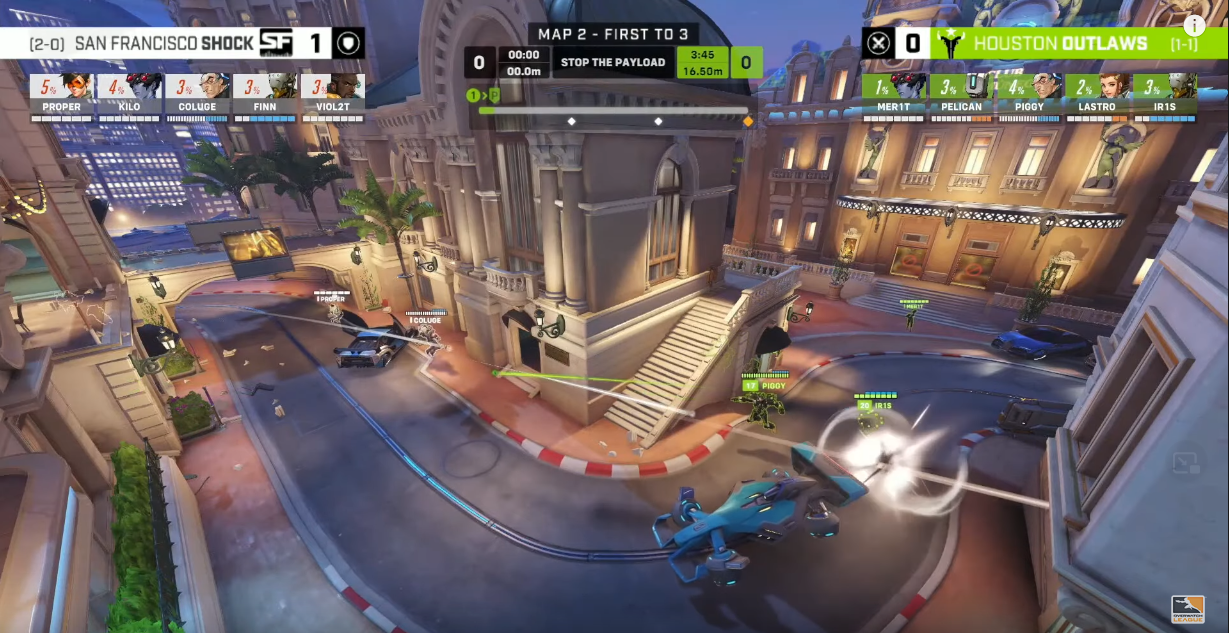
Although dive compositions with Ana and Lucio are most popular among professional teams, we have also seen other supports being utilized in specific scenarios. For example, Brigitte might not be able to stun anymore, but her shield provides extra survivability in chaotic team fights. Furthermore, her AOE heal, Inspire, is now induced by all of her abilities. The latter improvement makes her healing output disgustingly high. She has therefore been used on Gibraltar by many teams. San Francisco Shock’s Viol2t even played her successfully on Dorado defense.
Baptiste
Baptiste has also had his moments in the spotlight. Some Overwatch League teams, especially the London Spitfire, have included them in their rush compositions together with Mei and Reinhardt. This kind of composition appears to be particularly popular on one of the new maps, Midtown. That being said, some analysts argue that Baptiste will not be viable as soon as teams learn to adjust to rush compositions. His long ability cooldowns and immobile Amplification Matrix make him weak against dive compositions. In general, rush comps seem only powerful on maps featuring narrow areas.
Zenyatta
Zenyatta is in a tricky position in Overwatch 2’s current meta. His DPS and Orb of Discord are deadly on maps with open features and long-distance angles where Zenyatta can position himself to hold choke points from afar. Yet, his immobility and limited tools for self-defense make him a vulnerable target and a high-risk, high-reward hero. Nevertheless, some Overwatch League teams have experimented with him. He frequently appears on Circuit Royale, paired with Brigitte or Baptiste.
Mercy
Lastly, there is Mercy. And as a Mercy main myself, I have to write with sadness that she might be the weakest support hero at the moment. Mercy has always been played defensively in professional Overwatch. But the changes made in Overwatch 2 give her less survivability and force gamers to play even more carefully. Without shields and the protection of a second tank, she has to make constant use of environmental coverage resulting in fewer opportunities to impact her team or resurrect its members. The Boston Uprising has tried to use her on Ilios’ Lighthouse but with no success. For now, she is outshined by other supports.
Conclusions
Supports certainly feel and play differently in Overwatch 2. Their gameplay experience has become more volatile yet more impactful. The fast-paced, FPS-like team fights result in thrilling, meaningful matches for support players. However, your experience and impact on a game might heavily depend on which specific hero you choose. Additionally, some players, such as ML7, argue that the low queue times for support players are caused by the role quickly becoming tiresome. The support role consists of just six heroes. Moreover, only a few new features have been added to these heroes in the Overwatch 2 beta. More supports could be the solution, but if and when this happens can only be speculated as we wait for the official release of Overwatch 2.