August 16, 2026
Raidiant is a wonderful web of talent coming together to produce broadcasts for exciting esports events. A lot of work goes into bringing these productions together, so we are going to take a look at some of those efforts. From building a timeline to procuring talent, we sat down with some of Raidiant’s staff to get a closer look at the behind-the-scenes work that goes into creating a successful live broadcast. Here is a closer look at what goes into making a great broadcast from the Raidiant team.
Production timelines
Before any event, it is important to build out a timeline as a rough outline. This will help the production stay on task as it begins to take shape. We had a chance to talk with Sr. Broadcast Producer for RaiantGG / Dignitas, Alexis ‘Pinecone’ Wood, to see what the prediction timeline process looks like.
When asked how she approaches her process, Pinecone stated that the process usually starts with receiving a piece of key art, a mood board, or another graphic element from the client that determines the overall direction of the show’s visual presentation. Once that is acquired, the show can be built around this information by turning existing wireframes from production graphics into fully built broadcast graphics for the event.
While the graphics are being built, Pinecone states she spends time watching other content within the game or scene they’re serving, taking notes, and developing the run of show and programming plan.
“We want to prioritize something that looks good, feels fresh, and stays true to the endemic communities/fans we’re serving with our broadcasts.”
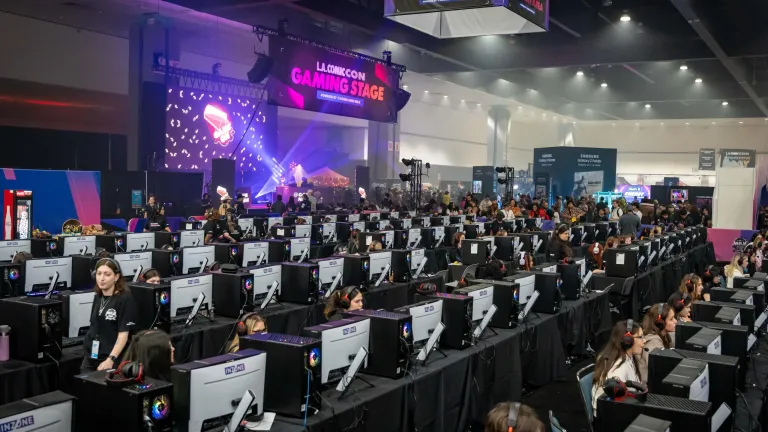
When it comes to how long a standard production timeline can take, Pinecone simply states, “It depends.” A minimal product can be turned around in a few days, but to really create a fresh-feeling, polished broadcast, it can take 5-6 weeks to start. You need time to go through revisions and find the right talent, but not so long that it gets forgotten to the point that the project loses steam. The production timeline can vary depending on the scale of the project.
To help with the production timeline, it’s good to have your resources ready as well. Pinecone stays organized with the use of good templates, so she has a solid foundation to start from on each project. She also makes sure she uses the right platform for revisions on assets and content to help make sure production does not get stalled. Another key aspect that helps with the timeline is utilizing Frame to preview the look and feel of live broadcasts with the client so they are able to give direct feedback on every asset, in motion, to make sure it reflects their vision rather than trying to do a live demo, which may pressure the client to rush to give feedback.
“It’s important to be consistent in immediately delivering your recordings, event wrapups, and notes so the project no longer occupies space in your brain so you can move on to the next event without a foot still in the other pool, so to speak.”
Broadcast talent
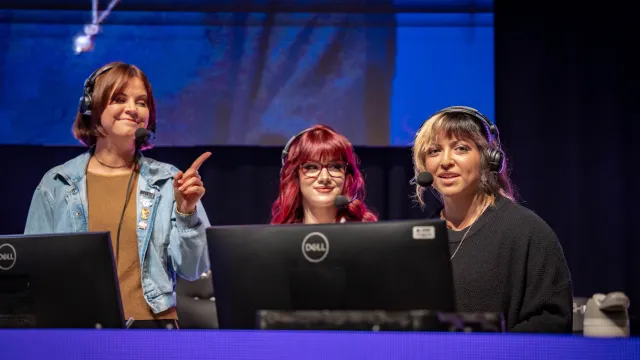
We had a chance to speak with Nat_CatintheHat about her past work with Raidiant and what esports broadcast services are like. Nat got her start with Raidiant by answering a casting call from Sapphire on X. She states the initial event did not work out, but she was able to connect for a future event, Raidiant Academy.
While every broadcaster might have a different ritual, Nat stresses the importance of picking out the right outfit so you look and feel great on the day of, and of preparing plenty of drinks and snacks to fuel yourself between maps. To prepare for the event, she says it is important to read up on all that you can about the event and players to be able to approach the event with background information and stats. During the event, she will keep the important information as a cheat sheet on her second monitor, so she can refer to it throughout the broadcast. Once she has gathered enough information, she’ll get to know the production team and get ready for the big day.
From a veteran broadcaster, Nat states that the best advice she can give for someone starting their broadcasting journey would be to find your own voice and let your personality shine through.
“While learning professionalism is important, production teams aren’t looking for perfect copy-cat robots. My #1 piece of feedback has been that folks love my personality and that I’m clearly myself on camera. Plus, it helps you stand out from the crowd!”
Nat will continue broadcasting in the future, and she had this to say about working with Raidiant: “The Raidiant team is so wonderful and has been wonderful to work with. As a trans caster, it has been great to have such a safe space to be myself while honing my craft. I’ve loved the opportunity to connect with GC players and the greater GC community.”
The broadcast comes together
Bringing the broadcast production all together is no small task. It takes a lot of coordination from a lot of moving parts, so you need a talented and capable captain at the helm of the ship. Heather “sapphiRe” Mumm, Raidiant’s founder, is one such captain. We got the chance to pick Heather’s brain a bit about what goes into creating a successful broadcast.
When it comes to big events, staying organized is a big component of ensuring things run smoothly. Heather states that the key to staying organized is always making sure every partner and every project gets the attention it deserves. Balancing multiple events, game titles, partners, and deliverables at once can be a daunting task, so prioritization really comes down to understanding what is most time-sensitive and what unlocks the next step for the rest of the team.
“I’m really proud of the Raidiant team because we don’t operate in a narrow lane. WE have people with incredibly diverse areas, even when something falls outside of their usual scope. That flexibility allows us to stay nimble, problem solve quickly and make sure the overall quality of the event never suffers just because priorities shift.”
She states each event is unique, even though the foundation is similar across esports. Whether the work is being done on a different game title, in a different format, or with a different broadcast style, there are still core pieces that have to happen. Graphics need to be created and approved, storylines need to be developed, content needs to be planned, talent needs to be hired, rehearsals need to happen, and players need to feel supported. To help stay organized, it is important to make the workflow repeatable if possible.
The more we can build strong systems, templates, timelines, and communication processes, the more room we have to customize each event in ways that actually matter.”
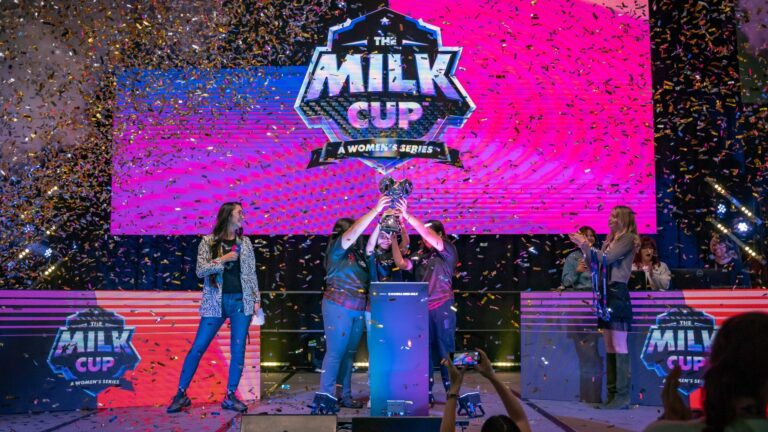
To measure the success of an event, Heather looks at metrics such as viewership, payer participation, social media engagement, and other measurable outcomes. Those numbers help tell part of the story, and they are important for understanding growth and impact.
Every event will teach you something. It is important to reflect so you can continue to improve and create things that matter to the player’s experience, the broadcast, and the community of other opportunities being created behind the scenes. Past events shape future events to help continue building towards and achieving success.
“Did we make a meaningful impact on the players, the fans, or the community? Did we give someone a spotlight they had earned but never had access to before? Did one of our part-time contractors get the chance to step into a new role, succeed in it, and add something meaningful to their resume? Did we make someone care about a game, an event, or a community they might not otherwise have paid attention to?
Those are the moments that stick with me. Sometimes success is a great broadcast number and sometimes it’s a player saying this was the first time they truly felt like they belonged in esports. Both matter.”