November 9, 2026
Women’s esports has an audience problem. Or at least, that’s what you might think if you only look at the headlines.
For years, women’s competitive gaming has been treated as a smaller, riskier investment than traditional esports. Audiences are supposedly too limited, engagement is low, and the return on investment is uncertain, so brands don’t justify spending serious money on it. It’s a familiar argument.
But how much of that is actually true?
The 2025 Female Esports Report from Esports Charts paints a much more complicated picture. Yes, total watch time declined last year. Yes, fewer tournaments were held. But average concurrent viewership increased, prize pools reached record highs, and major competitions continued attracting hundreds of thousands of live viewers.
So, there’s clearly an audience for women’s esports. The problem is that sponsors aren’t always looking at the right numbers to understand its actual potential.
Small calendar ≠ small audience
Let’s start with the number that looks the worst: according to Esports Charts, total watch time for women’s esports declined by 7.9% in 2025. Taken on its own, that sounds like a warning sign. An industry losing viewers is hardly the first place a sponsor would think to invest.
Except that’s not what happened.
The same report found that the number of women’s esports tournaments fell by 52% compared to 2024, following another decline the year before. There were substantially fewer events, fewer matches being broadcast, and fewer opportunities for fans to watch competitive women’s esports.
And despite all of that, average concurrent viewership actually increased.
That’s an important distinction. Fewer tournaments mean fewer hours of competition to watch, which naturally affects total watch time. But average concurrent viewership tells us how many people are tuning in at any given moment. And in 2025, that number went up.
In 2025, audiences were concentrating around fewer events, but that doesn’t mean they had stopped showing up.
For a sponsor, those two situations should lead to very different conclusions. One suggests that fans are losing interest. The other suggests that the opportunities to reach those fans have become more limited. And when fewer tournaments are available, the question becomes whether brands should be pulling back their investment or helping create more of the opportunities that audiences are already responding to.
The numbers speak for themselves
Women’s esports may not attract the same audiences as the biggest international tournaments, but some of the numbers are hard to ignore.
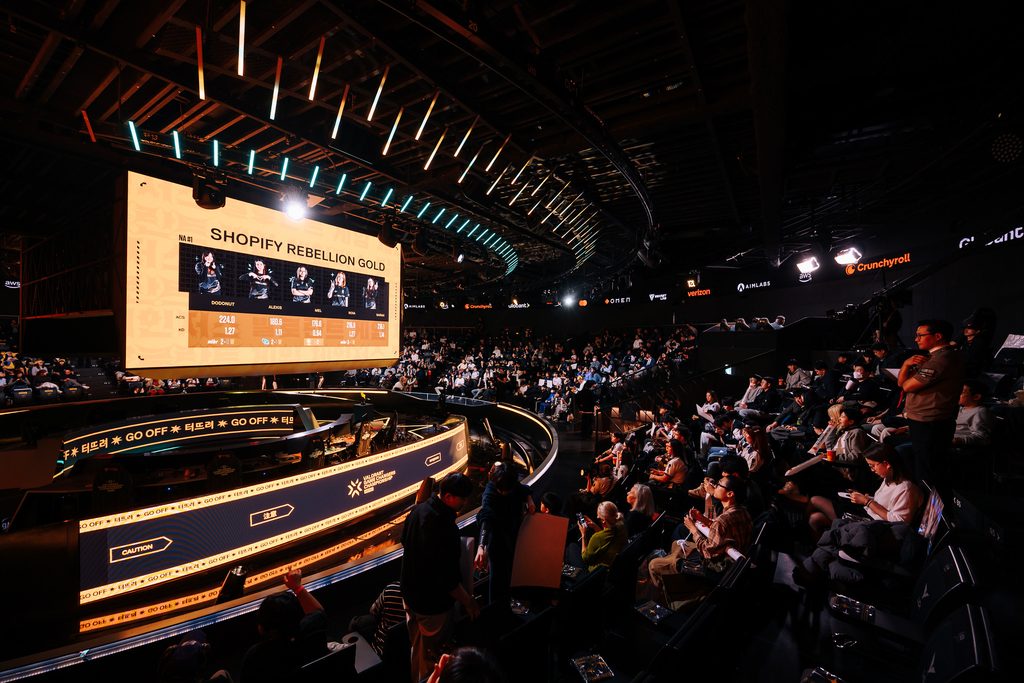
The 2025 VALORANT Game Changers Championship reached nearly 229,000 peak concurrent viewers and generated 3.75 million Hours Watched. Meanwhile, Riot Games reported that more than 2 million users participated in Game Changers Pick’Ems, second only to VALORANT Champions Paris. And while viewership was down from 2024, that’s still a considerable audience engaging with women’s competition.
Those numbers are interesting because they show that fans aren’t just watching matches. They’re also getting involved, making predictions, and following the competition beyond the broadcasts. And that’s something sponsors should be paying attention to.
Another thing sponsors often get wrong is assuming that bigger audiences automatically mean better sponsorship opportunities. Viewership matters, of course, but so does how people interact with an event and whether they’re actually interested in the brand behind it.
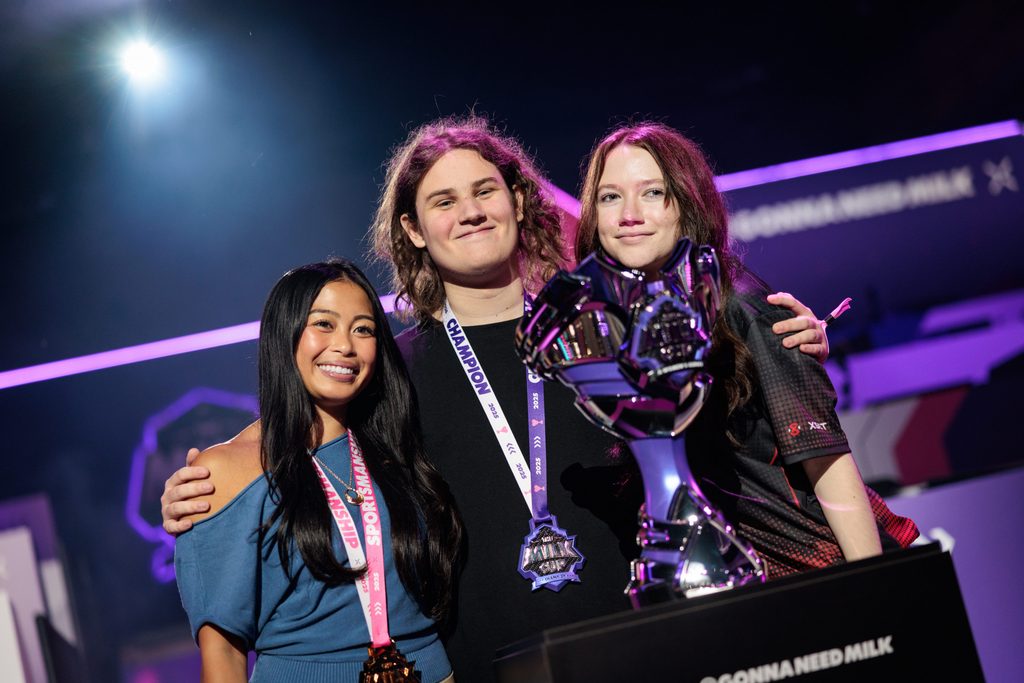
Take The Milk Cup, Raidiant’s women’s Fortnite competition with Gonna Need Milk, which generated 4.3 million total views in 2025. Beyond the tournament itself, The Milk Cup Academy offered coaching, mentorship, and opportunities for players to develop their skills.
Or VALORANT Game Changers NA, which gives brands opportunities to connect with audiences throughout an entire competitive season.
These are examples of how sponsorship can go beyond broadcast visibility, reaching players and communities through ongoing programs.
And there’s commercial value, too. According to Esports Charts, the 2025 VALORANT Game Changers Championship generated an estimated $1.88 million in media value, the highest of any women’s esports tournament that year. That doesn’t mean sponsors earned $1.88 million, of course, but it shows these competitions are capable of generating substantial brand exposure.
And bigger doesn’t always mean better. A brand could spend thousands sponsoring a major esports championship and get plenty of visibility but very few conversions. Meanwhile, a smaller tournament with a more relevant audience could bring in actual customers at a fraction of the cost. At the end of the day, what matters isn’t just how many people see your brand, but whether that exposure helps you achieve your goals.
So, what’s the takeaway?
Women’s esports prize pools reached a record $3.3 million in 2025, but the number of tournaments fell by 52%. So, is that something to celebrate or something to worry about?
Bigger prize pools and more prestigious competitions are worth celebrating, but what good is that progress if fewer players have the chance to compete? We need more consistent opportunities, from grassroots tournaments to international championships, if we want the scene to keep growing.
And there’s a business opportunity here, too. Sponsors don’t need to invest in women’s esports out of goodwill. Smaller competitions can offer access to specific, engaged communities, potentially at a lower cost than major championships. And supporting those communities early gives brands the opportunity to build recognition and relationships as they grow.
Esports programs for women, like Raidiant’s Rally Point, can bring both sides together. They give players more opportunities to compete while offering brands a way to reach audiences that larger events might not serve as directly.
Maybe that’s what sponsors are overlooking. Women’s esports doesn’t have to match the biggest tournaments in the industry to be worth investing in. The question is whether a particular event reaches the right people and delivers results that justify the investment.
The audience is already showing up. The question is whether the industry is willing to give it something to keep showing up for.